
Calling 911? Consider if You Have An Emergency Before You Dial
Emergency calls across the Truckee Meadows have more than doubled from 2024 to 2025, placing growing demand on local responders.
According to recent data from Truckee Meadows Fire & Rescue (TMFR), the spike reflects both regional growth and expanded response agreements. But it also raises an important public question: What actually qualifies as a real emergency?
True emergencies typically involve an immediate threat to life or property. Typically, the majority of high-priority calls fall into medical or rescue situations, car accidents with injuries, and structure or wildland fires, according to TMFR’s 2025 statistics. These incidents often require multiple response units – this means more engines and trucks sent to a call – including highly trained personnel. Situations where someone is unconscious, seriously injured, experiencing chest pain, involved in a serious crash, or facing an active fire with visible smoke or flames are clear reasons to call 911. In these cases, seconds do matter.
However, not every call meets that threshold. A significant number of responses are categorized as “good intent,” meaning nothing was found upon arrival, as well as false alarms and minor crashes, as TMFR refers to in their recent data. Calls to 911 for smoke that has already stopped, for example, could take resources and crews away from other life-threatening emergencies elsewhere. The recent data also shows a rise in response units sent to neighborhoods like Sun Valley and Stead, stretching resources further and possibly reducing response times.
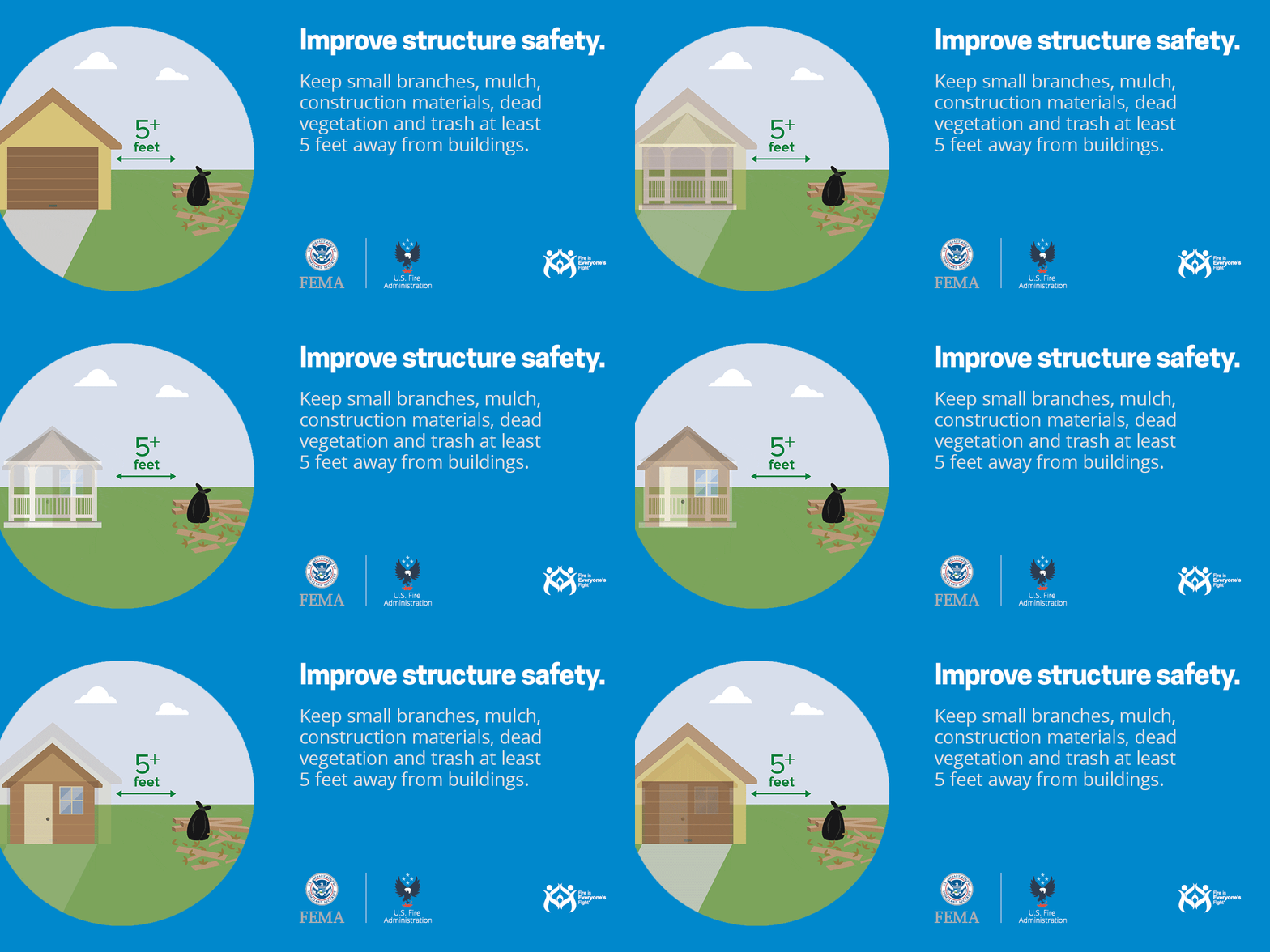
So, how can residents help reduce risk?
Fire risk mitigation is key, especially in and around your home. Creating defensible space, clearing roofs and gutters, maintaining fire-resistant landscaping, and avoiding outdoor burning during red flag warnings can prevent emergencies before they happen.
When you’re at home, make sure to not leave open flames like candles, cigarettes, and stoves unattended and keep them at least three feet away from combustibles. Any electronics with lithium batteries and space heaters should be turned off and unplugged before leaving the home. Make sure to clean dryer lint filters after every use. Changing a few small habits can help you protect your home from fires and potential damages.
For non-urgent situations, Reno residents are encouraged to dial (775) 334-2677 instead of 911 or other specific non-emergency lines. As call volume rises, staffing levels remain tight and training demands increase. Understanding when to call helps ensure that firefighters and paramedics are available when a true emergency occurs (when it does, don’t forget your go bag!).
Preparedness begins at home, and making informed decisions can significantly impact emergency situations not just for you but for the entire community.

COVID-19 vaccines explained

Latinos in Lake Tahoe Worry About Local, Unverified ICE-Sightings on Social Media

Food insecurity grows in Northern Nevada months into the pandemic
About The Author
