Food: A Source of Life at Fiesta on Wells
Within an eruption of sights and sounds, food is at the center of the Latino community at Fiesta on Wells.
Each year on Wells Avenue, usually around the third Sunday of September, you’ll likely bump into this celebration to commemorate the start of Hispanic Heritage Month (which usually takes place between mid-September and mid-October). The free-to-attend event, Fiesta on Wells, is organized by Latino Arte and Culture, welcomes members of the community of all ages to revel in pride right here in Reno.
While there is a great variety of local entities, organizations and artisans that table at the annual street fair, the music, dance and food is where you will most likely find congregation.
For some, the food that vendors offer may provide the comforting taste of home, a moment of nostalgic reflection while remembering meals shared with friends and family, or the opportunity to try something new.
This past Sunday, Sept. 20, I had the pleasure of checking out two of the food vendors in attendance.
My first stop was Fuente de Vida, who had consistently had a crowd of incoming patrons my entire time at Fiesta on Wells. I am glad I decided to follow suit and join the line as the wait was well worth it!
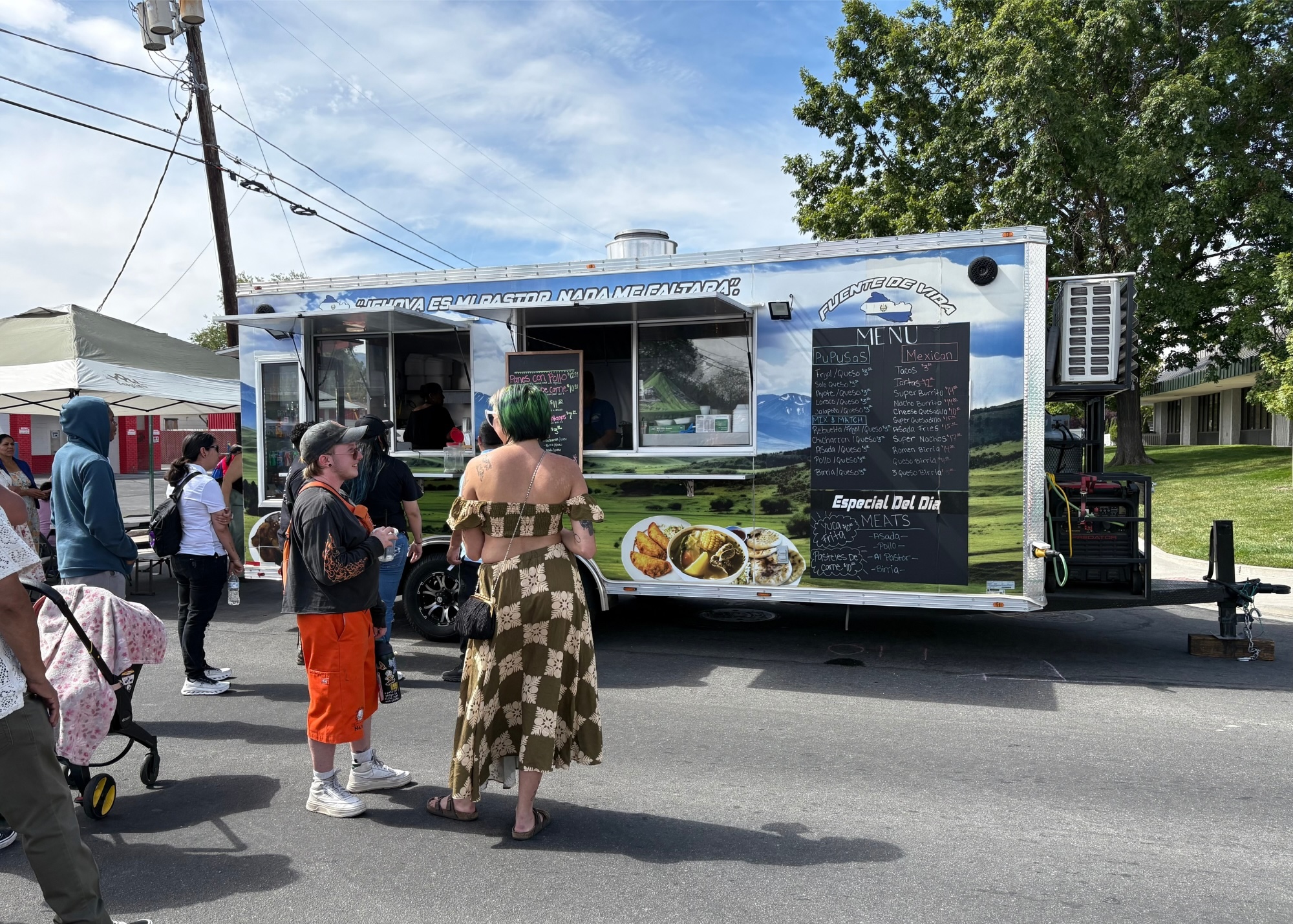
Fuente de Vida is a Salvadoran food truck that has been operating in Reno for over two years and has been in attendance at Fiesta on Wells years prior. While their menu primarily features dishes from El Salvador, they also offer a selection of Mexican items including Birria Ramen, the Mexican-Japanese fusion dish that has taken the world by storm since its creation 10 years ago.
I decided to order their loroco/queso and jalapeño/queso-filled pupusas — as I had yet to try pupusas — and empanadas de plátanos, otherwise known in English as “plantain empanadas.” As a vegetarian, my biggest fear when trying new foods is that flavor will be sacrificed when meat is not present. That concern was alleviated entirely with the first bites of my order.
Pupusas, the national dish of El Salvador, were first produced by the indigenous Pipil people of that Central American nation. Traditionally, pupusas are stuffed with simple and accessible ingredients, such as beans and maize i.e. corn, but pupusas can be filled with any ingredients and are inherently stuffed corn tortillas that are grilled or fried and can be eaten any time of day.
I started off with the jalapeño and queso pupusa which was lighter on the palate than the subsequent items. The freshness of the jalapeño cut through the cheese, and when paired with the tangy curtido (usually a pickled item), this first pupusa was a refreshing start to the rest of my meal from Fuente de Vida.
The second pupusa was filled with loroco and queso. Loroco is a climbing vine plant native to Central America, its unopened flower buds are most commonly used in pupusas. When combined with the cheese in the pupusa, the flavor is earthy and savory. The crispiness of the masa, in other words dough, compliments the soft and hearty filling, overall having a more full-bodied taste than the jalapeño pupusa.
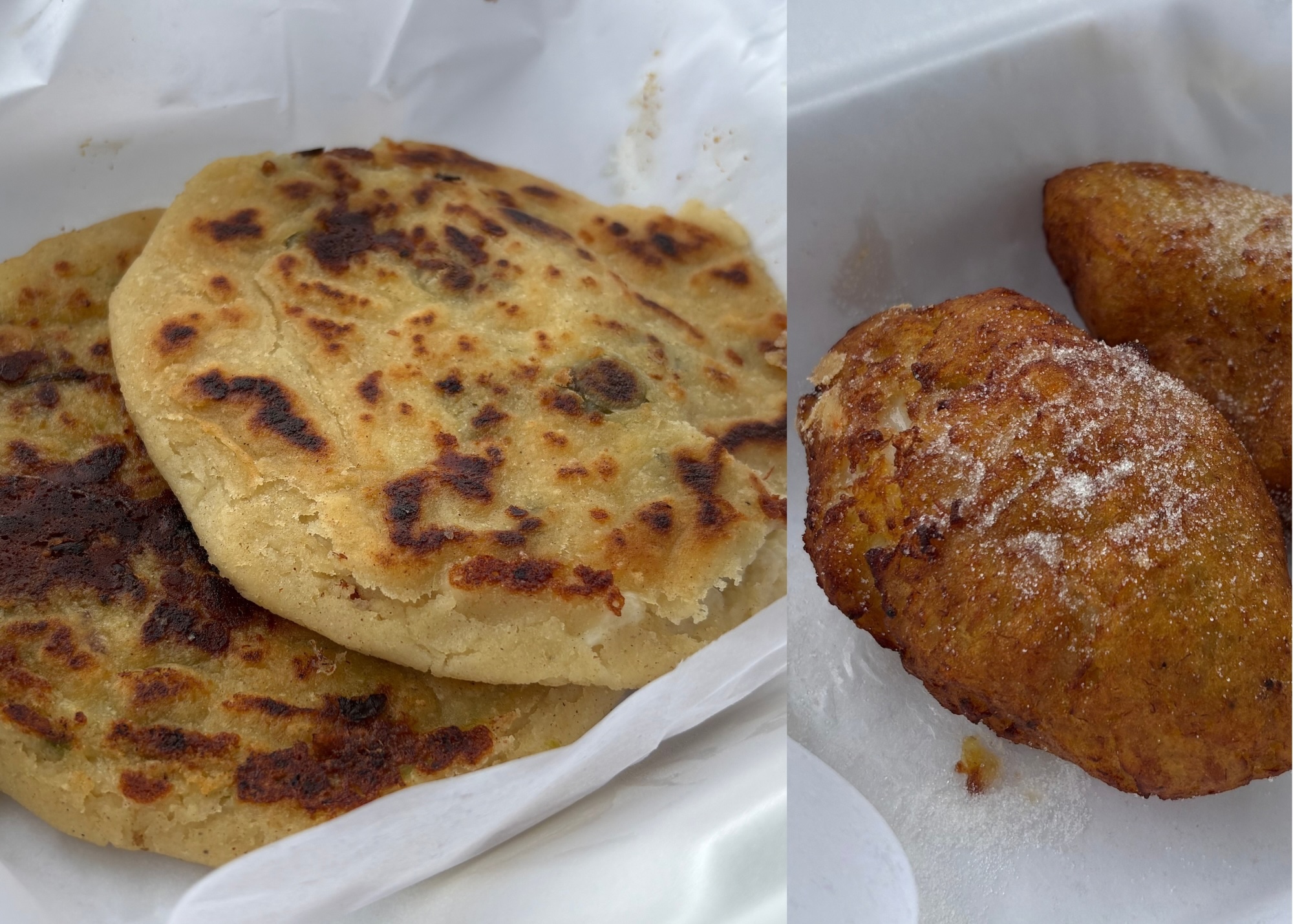
Finally, I ate the empanadas de plátanos. While you may be more familiar with their Mexican counterpart that can be savory or sweet, empanadas in El Salvador are crafted solely as a dessert.
The dough of Salvadoran empanadas are composed entirely of mashed plantains, and Fuente de Vida fills their empanadas with a vanilla custard. After being fried, they are rolled in sugar and served hot.
The result is a pastry so pillowy that it completely falls apart in your mouth. The flavor of the custard is subtle, allowing the sweetness of the plantains and sugar to completely overtake you. Though Fuente de Vida’s empanadas were especially hefty, I found myself unable to resist the soft dough and slightly sticky custard, and I was soon left with only the sugary remnants.
Despite being practically full from my order from Fuente de Vida, I did not want to leave Fiesta on Wells without having at least one other food item. In this mindset, I found my way to Sweet Heaven Treats.
With a booth adorned in pastel pinks, strawberry lanterns and Hello Kitty plushes, Sweet Heaven Treats immediately caught my gaze. They offer lemonades, refreshers and fresas con crema (“strawberries and cream”). Their fresas con crema are customizable through a variety of toppings, though I ultimately decided to get the classic strawberries and cream.
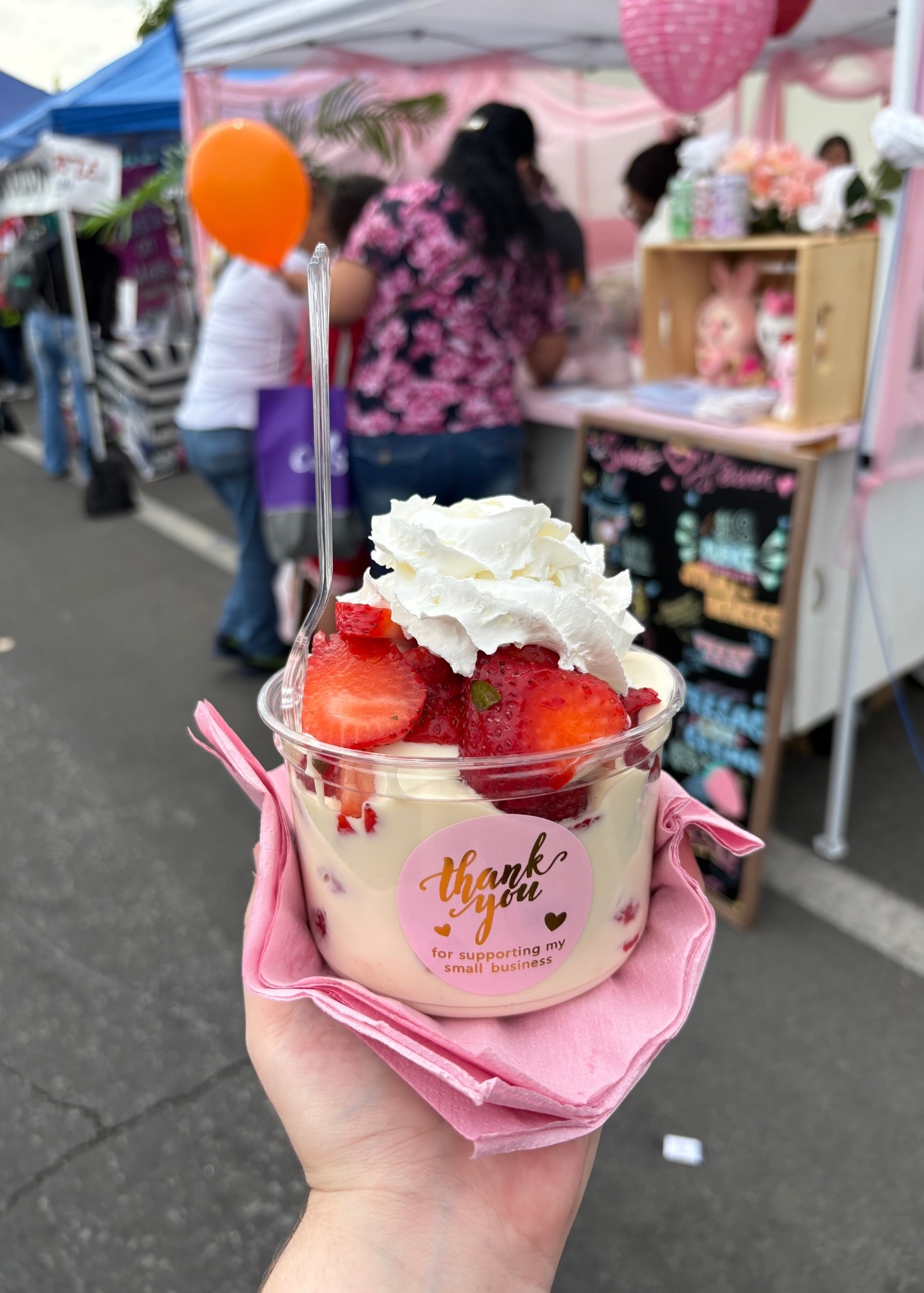
The dessert I received was weighty, but clearly delicately produced. The strawberries were meticulously placed within the cream, and the liveliness of the strawberries paired with the velvety cream made for the sweetest conclusion to my time at Fiesta on Wells.
If you weren’t able to make it to Fiesta on Wells this year, be sure to follow Latino Arte and Culture online for the latest updates on upcoming Latino-centric events in Reno. You may have a chance to try these delicious foods next time.
Written by Eugene Melmani, Photos by Eugene Melmani

Nevada to divest from some firearms manufacturers

WCSD using federal COVID-19 funds for summer school program
Faith-based vaccine outreach underway to reach northern Nevada Latinos
About The Author

Noticiero Movil
Managing Editor of Noticiero Móvil