23 Things You Should Have in Your Emergency Go Bag
Northern Nevada is known for a few different disasters: floods, forest fires, snowstorms and avalanches, and unfortunately earthquakes. Despite technology’s ability to predict potential disasters in advance, preparedness can be crucial, especially for Northern Nevadans who love to spend time outdoors.
Having an emergency bag ready in your home, in your car, and at work is an important aspect of preparedness. And if you plan on being in the backcountry, research and consider adding extra items to help aid you in a disaster.
Here is a list of some helpful items that you should consider putting in your bag.
- Food: focus on nonperishable and high-calorie options like energy bars, peanut butter, canned meat or soup (e.g. you can use bouillon cubes to create an easy broth), jerky, or nuts
- Water: one gallon per person per day is recommended for drinking, sanitizing, and cleaning yourself, according to the American Red Cross; also add sanitation tools like a pot or metal mug to heat water in or have water disinfection tablets
- Flashlight: consider several types including a headlamp to keep your hands free or a hand-cranked flashlight
- Batteries: assess your various electronic devices to figure out the type of batteries you may need; bring extra
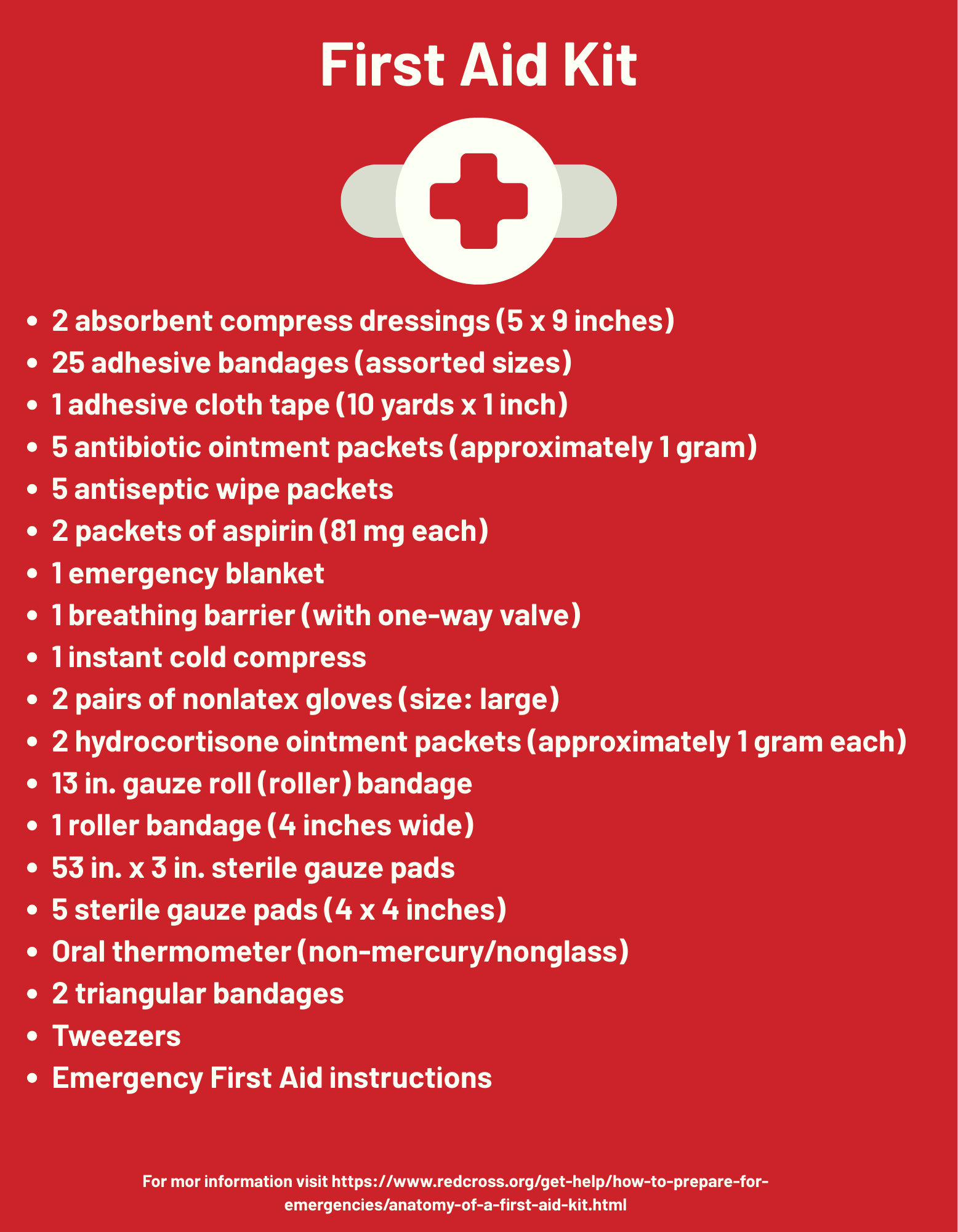
- First aid kit: read through the graphic below
- Change of clothes: having an extra set can help you remain clean and dry
- Shoes: should be durable, comfortable and protective of your toes, ankles, and heels
- Jacket: a water and windproof layer that can also keep you warm is important in our region
- Gloves: sturdy work gloves can help keep your hands free from injury
- Manual can opener: make sure you know how to use it!
- Duct tape: can be used to repair tents, backpacks or to hold items together
- Fire starters: matches and lighters are most common; make sure you can keep them dry
- Multitool: this device acts like a miniature toolbox and can help you repair things, open supplies, and even cut into things like seatbelts in an emergency
- Radio: Battery-powered, hand-crank, or solar radios are recommended
- Whistle and mirror: both are good auditory and visual aids to signal for help
- Cash: if the power goes out, there will be no access to banks or ATMS
- Blanket: lightweight mylar blankets that reflect sunlight can double as a signal for help; a thick, warm blanket is recommended for colder areas like Reno
- Sanitation wipes: for keeping yourself and your supplies clean
- Toiletries: essentials like toilet paper, soap, toothpaste and toothbrushes
- Navigation tools: local maps, a compass, and a GPS if available
- Ziplock bags: to keep your supplies dry
- Copies of important documents: including identification (passports, birth certificates, visas,), insurance policies, and medical history
- Prescription and non-prescription medications: consider adding pain relievers, allergy, and anti-inflammatory medications
Taking the time now to gather these essential supplies can make a significant difference in your safety, comfort, and peace of mind when it matters most. Start small if you need to, build your kit over time, and check it regularly for expired items.
Preparedness should not be about fear; it’s about confidence, resilience, and being ready to face the unexpected.
More Resources:
- https://www.ready.gov/kit
- https://ask.usda.gov/s/article/What-foods-should-I-keep-in-my-house-for-emergencies
- https://www.hopkinsmedicine.org/health/wellness-and-prevention/firstaid-kit
- https://www.redcross.org/get-help/how-to-prepare-for-emergencies/anatomy-of-a-first-aid-kit.html
- https://www.state.gov/global-community-liaison-office/crisis-management/packing-a-go-bag-and-a-stay-bag
Brianna Haas, a senior Journalism and Geography major at the University of Nevada, Reno (UNR) contributed this article to Noticiero Móvil.

With Stewart Indian School’s complicated and traumatic history, finding justice is a long road
CHA Nevada to offer influenza and COVID boosters ahead of flu season
Nevada Latino Caucus to introduce bills empowering and uplifting Latino families
About The Author
