
‘La Jaula de Oro:’ A Los Tigrés Del Norte classic Continue to Shine Light on Immigrant Struggles

Late September Los Tigres Del Norte performed at the Grand Sierra Resort in Reno Nevada amidst their “Los Tigres del Mundo” tour.
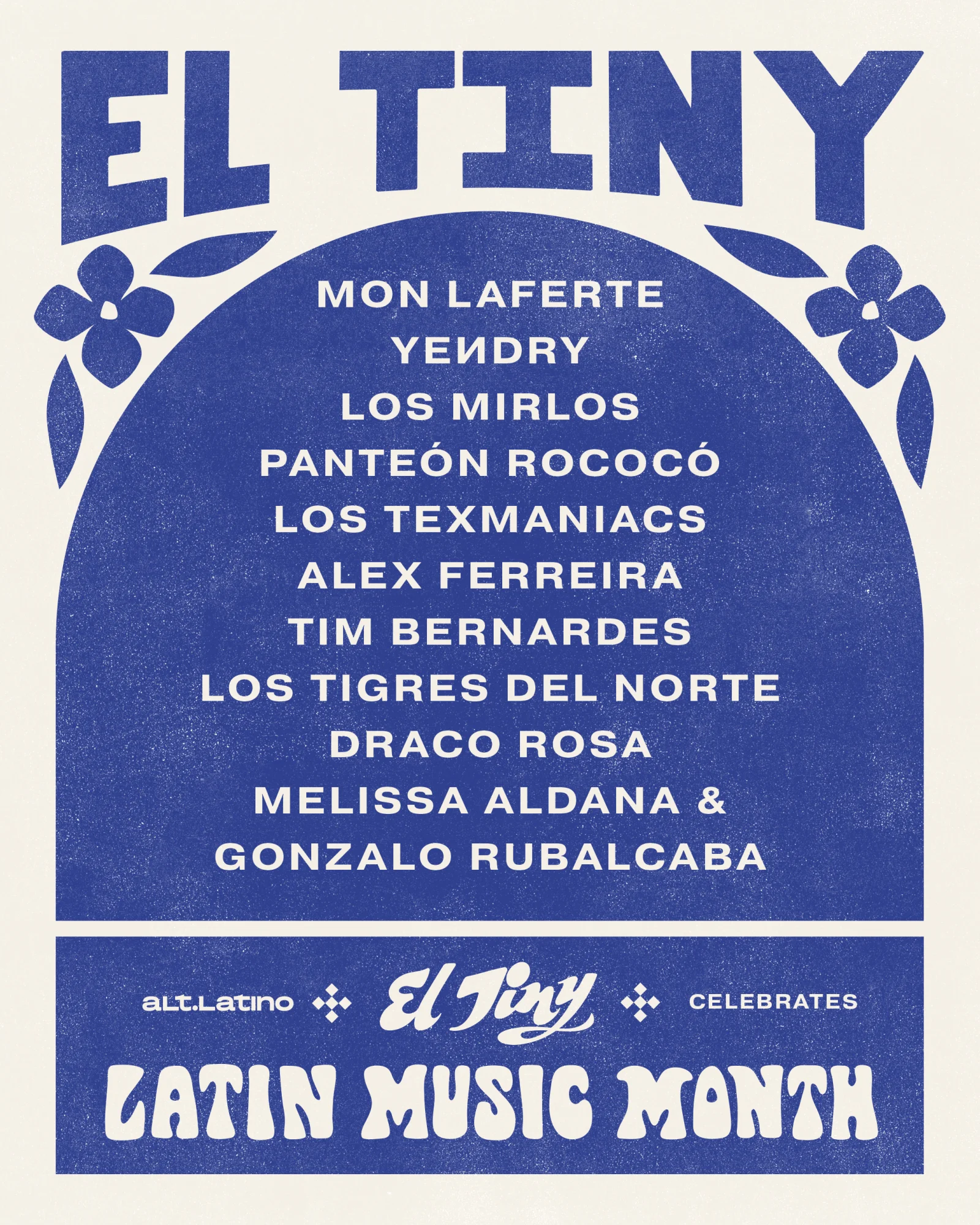
Thanks to a collaboration with NPR‘s Tiny Desk Concert, Noticiero Móvil had an incredible opportunity to interview brothers, Hernán Hernández (vocals and bass) and Jorge Hernández (vocals and accordion) on Sunday, Sept. 27. Now you can enjoy even more: the norteño band appeared on an “El Tiny” desk concert on October 15 as part of NPR’s Hispanic Heritage Series.
Throughout their 50 year career, Los Tigres have filled venues mostly with immigrants and their children. But this time it feels different. As Los Tigres continue on their world tour, after stops in Reno and Washington, D.C., immigrants also continue to deal with uncertainty. Temporary protection statuses are being revoked by the United States government and mass deportations are rising.
We spoke to the Hernández brothers about “La Jaula de Oro,” a song that speaks about feeling trapped in a space, “the gold cage,” that should feel like home. Its songs like this one, which continue to resonate with the Latino community and help deepen connections with artists who also express their own feelings, with us, of what it’s like to be an immigrant.
Listen to the entire interview and follow long with the transcript below.
(OPENING OF “LA JAULA DE ORO”)
Lindsey Deanda Paz: You may recognize the rhythmic tunes and distinctive track: this is “La Jaula de Oro” by Los Tigres del Norte. Their music is riveting and catchy, but if one takes the time to listen to their lyrics, they speak of the struggles that immigrants face.
Jorge Hernández, the lead vocalist of Los Tigres, expanded on their journey as a seven Grammy award-winning band.
Jorge Hernández: In the beginning, I’ll tell you, we started in a small town that was called Rosa Morada in Sinaloa, Mexico. In ’68, we went to the United States and started our tour and people brought us here, to San Jose, California. We got here and started our recording journey.
Deanda Paz: “Vivan Los Mojados,” “Contrabanda y Traición,” and “Juana la traiciónera” are some of the songs from their early discographies that had a deeper message if paid closer attention to.
Jorge Hernández: We started to see the public was very interested in songs about their community, about how they lives. People suffer and we started recording about those themes.
Deanda Paz: Los Tigres Del Norte continue to be a popular staple norteño band not only because their melodies catch your attention; but their lyricism reels you in. “La Jaula de Oro,” which translates to “The Golden Cage,” reveals the hidden immigrant experience of moving to the United States of America. The song itself has a catchy tune yet its lyrics carry the heavy weight of fear many immigrants face.
Jorge Hernández: Well sometimes you don’t think about the rhythm. You think about the communication to the public. We chose this rhythm because I think during this time, people would pay more attention when you sang like that. A song that’s ranchera, communicative, nostalgic, with lyrics of Mexican culture and the culture of other countries, not just Mexico.
Deanda Paz: With a decision as difficult as moving to the United States, most people just want a taste of what used to be home. Yet with the increasing generations of U.S. born Latinos, there is something lost in translation: The native tongue.
(Soundbite: lyric – “… mis hijos no hablan conmigo,” which translates to, “my children do not speak with me.”)
Jorge Hernández: Young people don’t want to speak the language, and that called our attention. But this [song] makes young people, parents, and the newer generation show their kids, and for them to grow up with these songs, it’s an example of a way to communicate and have that [the language] no matter where in the world we end up. We can talk in two languages, maybe three if possible … And that’s a great advantage for us Latinos – that we can communicate with others in two languages – and in our jobs we get to have more opportunities
Deanda Paz: Hernán Hernández, one of the four brothers, shared his perspective of how a song like “La Jaula de Oro” has evolved with the public.
Hernán Hernández: Back then it was easier to come to the United States, to come legally, because at that time it was easier to get the paperwork to come to the United States. It was also easier to get a job and you could enroll your kids in school.
Deanda Paz: This recent administration has recently cracked down on immigration enforcement, which has targeted a majority of Latinos. There has been a new wave of fear, one where immigrants may find comfort in a song that reveals how hard this pressure is on a day-to-day basis.
Hernán Hernández: Now it is getting more difficult because of the extent that our government is changing. But also it’s more notorious now. With this government and this president for the first term it was very aggressive. In this way he used the Department of Immigration and now it seems as if it’s more aggressive. It’s getting rid of the help in places that need help from the community.
The strength is reflected in the jobs that Latinos take, the ones that Americans don’t take. With more Latinos here, each time there are more people who are being educated, more people going to school, study and more of a possibility to gain a political position where one can help the Latino community.
Thank you for listening, this was Lindsey Deanda. Don’t miss Los Tigres del Norte’s “El Tiny” special Tiny Desk concert starting October 15 as part of NPR’s Hispanic Heritage Series.

Statewide test scores show growth across districts, demographic groups
Local nonprofit uses horses to provide therapy to kids

Biden secures majority of votes in presidential race in Nevada day after being declared the victor
About The Author
