
Passion for Panini Sticker Collecting Grows in Reno-Sparks
A Facebook Marketplace message leads to a parking lot meetup outside a card store.
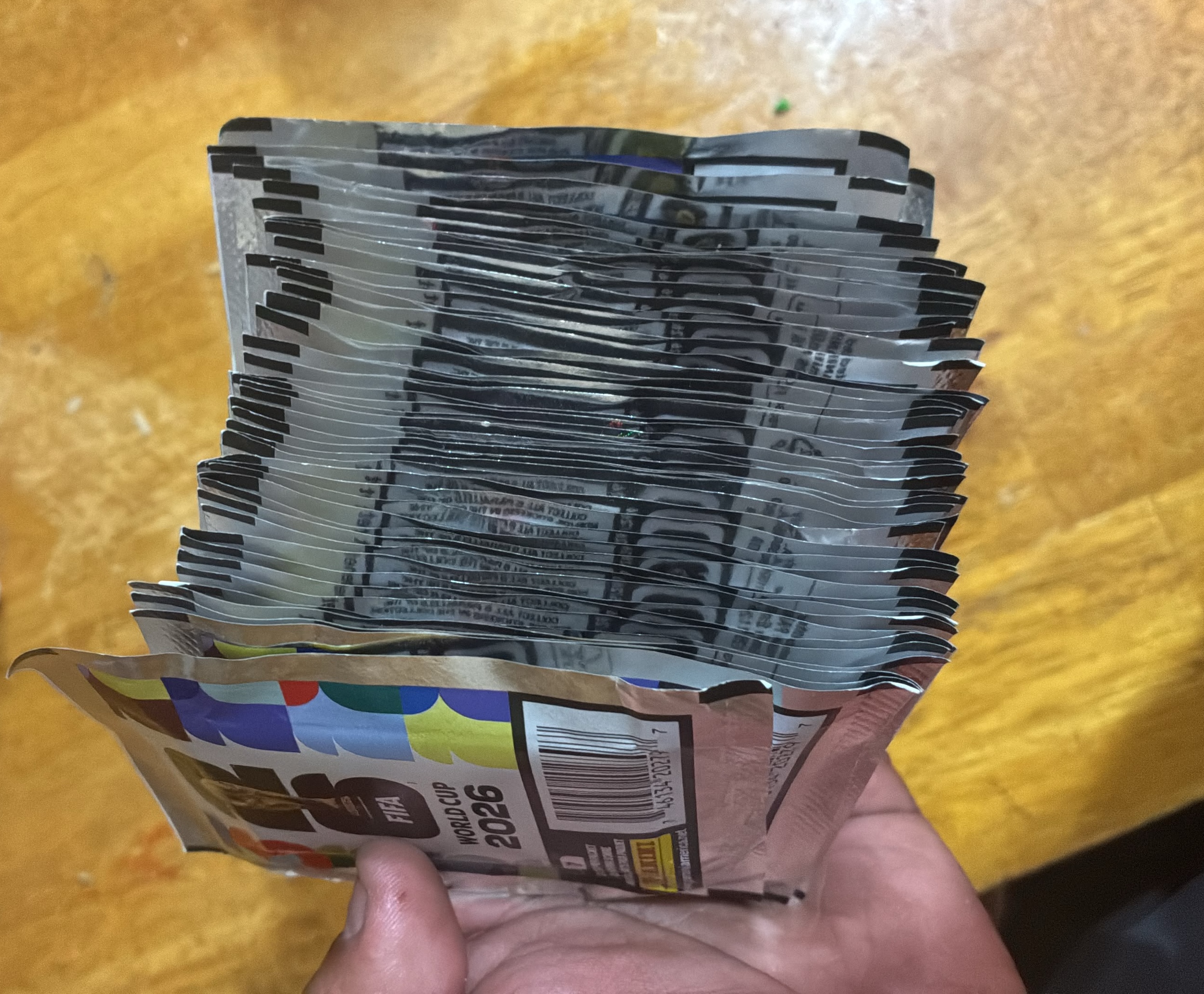
Two collectors stand over the trunk of the car, flipping through stacks of Panini World Cup Stickers. They compare lists, negotiate, and trade any duplicates they may have. Always holding on to the dream that each swap could bring them one step closer to their ultimate goal — completion of the entire Panini sticker album.
For most collectors in Reno, this type of exchange has become a signature part of the buildup to the 2026 FIFA World Cup. What simply begins as buying packs of stickers hoping to unpack what’s immediately needed, quickly turns into a wider search. An adventure which includes posting online, connecting, and meeting with strangers across the city to trade for what the other is missing.

For this year’s the World Cup, Panini released its largest album ever produced. This increase in size stems from the expansion of new competing nations for the 2026 tournament. Where as in previous years, only 32 nations qualified, this World Cup is the first with 48 nations in the competition. As a result, this album features a total of 980 stickers across the 48 national teams, each team includes 18 player stickers, a team photo, and the federation badge.
This is album 15 of the series, a collection which dates back to the 1970 World Cup.
At roughly $2 per pack of seven stickers, collectors can purchase single packs or bundles of up to 50. It is estimated that it will cost upwards of $1,000 to complete the album without the use of any trading.
However, being a collector in Reno is far from a solo effort.
Bringing Tradition to a New City
For Paulina Mendoza, sticker collecting started long before this year’s World Cup and way before she ever moved to Nevada.
Born and raised in Mexico City, Mendoza received her first Panini sticker album in 2006 from her uncle, who gifted one to her, her siblings, and her cousins as the tournament began.
Growing up in a family where soccer culture runs deep, she quickly became obsessed with the collecting process and trading between her family members.
She describes growing up in a culture where sticker collecting wasn’t just an individual hobby, but rather something shared by everyone there. In Mexico City, large groups of collectors gather in popular, easy to get-to places like the Palacio De Bellas Artes, turning the area into trading conventions.
“Everyone is sticker collecting in Mexico City,” Mendoza said. “Places all over would fill with people looking for trades. Imagine groups of people just shouting back and forth at each other the stickers they are looking for. All you have to do is yell what you need, for example ‘¡Mexico 13,!’ and seconds later you will have a few people right in front of you ready to start negotiating.”
Gatherings like these kept Mendoza attracted to the hobby over several World Cups. Following the 100% completion of her 2006 sticker book, she continued to complete both the 2010 and 2014 albums.
The tradition followed Mendoza as she moved to Reno in 2017. While the scene is a lot different than what she had experienced in Mexico, she still participates in each cycle, buying packs and searching for trades online.
“I don’t think I’ll ever stop doing it,” Mendoza shared. “It’s something that’s been a part of my life since I was a child and it’s something that I can share with my friends and family. I will always enjoy that satisfying feeling of finally hunting down a sticker you’ve been looking for. Me and my family have always loved the World Cup, this is one of the ways to be a part of it.”
Now on her fifth album, she looks to fully complete the 2026 collection, something she has yet to achieve since moving from Mexico City to Reno.
Welcoming the New Generation
Despite its rich history, Panini sticker collecting can still be a new, and welcoming hobby, to those who didn’t grow up with the tradition.
Axel Orozco, a 19-year-old University of Nevada, Reno student, was introduced to the sticker album this year through friends. Already familiar with the collecting and trading communities from his Pokemon card collection, he was quickly able to adapt to the World Cup version.
“I’m glad I was introduced to this,” Orozco said. “I’ve always been a soccer fan, but was never really a fan of the cards. Once my friends showed me this I knew I would be hooked.”
He describes the scavenger hunt as a favorable part of the experience.
Orozco said he connects with other collectors online and arranges meetups for trades. He explains that meetups are an enjoyable aspect of the collection process.
“I know it might be weird to meet up with a bunch of random people,” he said. “But I personally haven’t had any issues or heard of anyone who has. It’s genuinely a group of collectors who enjoy the hobby and want to fill in their album. It’s cool to see the people the stickers connect you with.”
What starts as a simple online message leads to a potential connection that lasts longer than the trade.
The Making of a Trading Network
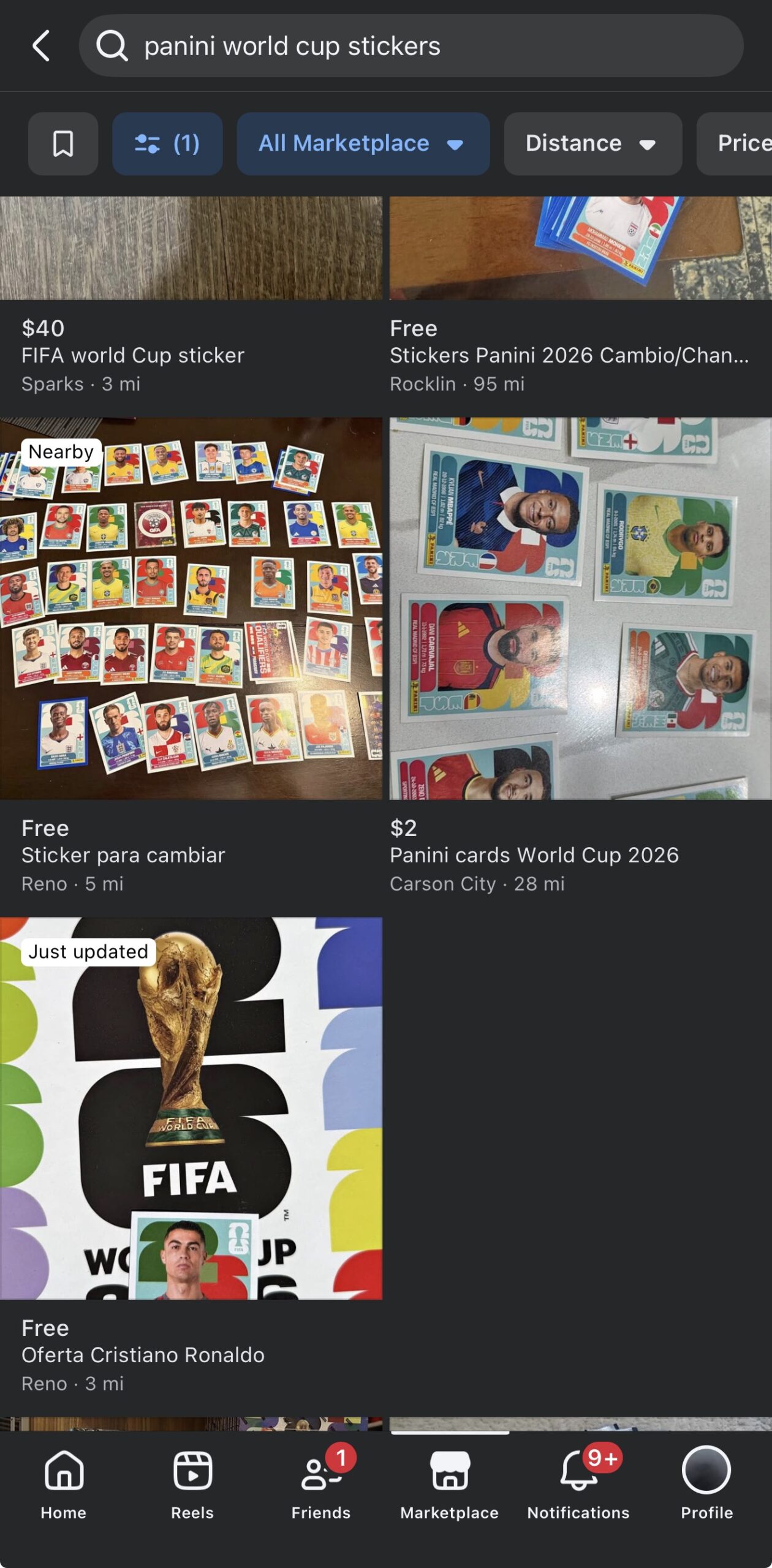
With the popularity of the Panini World Cup Sticker Albums growing in Reno, and listings for trades slowly multiplying across Facebook Marketplace, a structured system started to form behind the scenes.
Juninho Flores, a 35-year-old native of San Francisco and longtime sticker collector, noticed that much of Reno’s sticker economy mainly navigated through Facebook Marketplace. Where messages were slow, trades were isolated, and efficiency wasn’t where it could be. Having grown up in the Bay Area, Juninho was accustomed to a large-scale trading community like that of Mendoza’s in Mexico City.
“I just asked myself why are people doing it like this?,” Flores wondered. “I asked around to see where the group chats were, where the trading meetups were, and there was none of it. I became tired of looking across a bunch of different listings for trades, there were all these people wanting to trade, they just needed to be put in the same place.”
With hopes of forming a more efficient trading network, Flores created a small WhatsApp group-chat dedicated to World Cup sticker collectors in Reno. In a simple yet effective manner, Flores began replying to listings on marketplace with details about his group chat and what he was trying to do.
One by one, over the span of ten days, Flores said he managed to increase the group chat to 28 members. The group has become a constant stream of activity with messages coming in throughout the day. Anything from lists of what collectors need, to the quick arrangement of meetups. What once required a long one-on-one conversation can now be done within minutes across multiple traders.
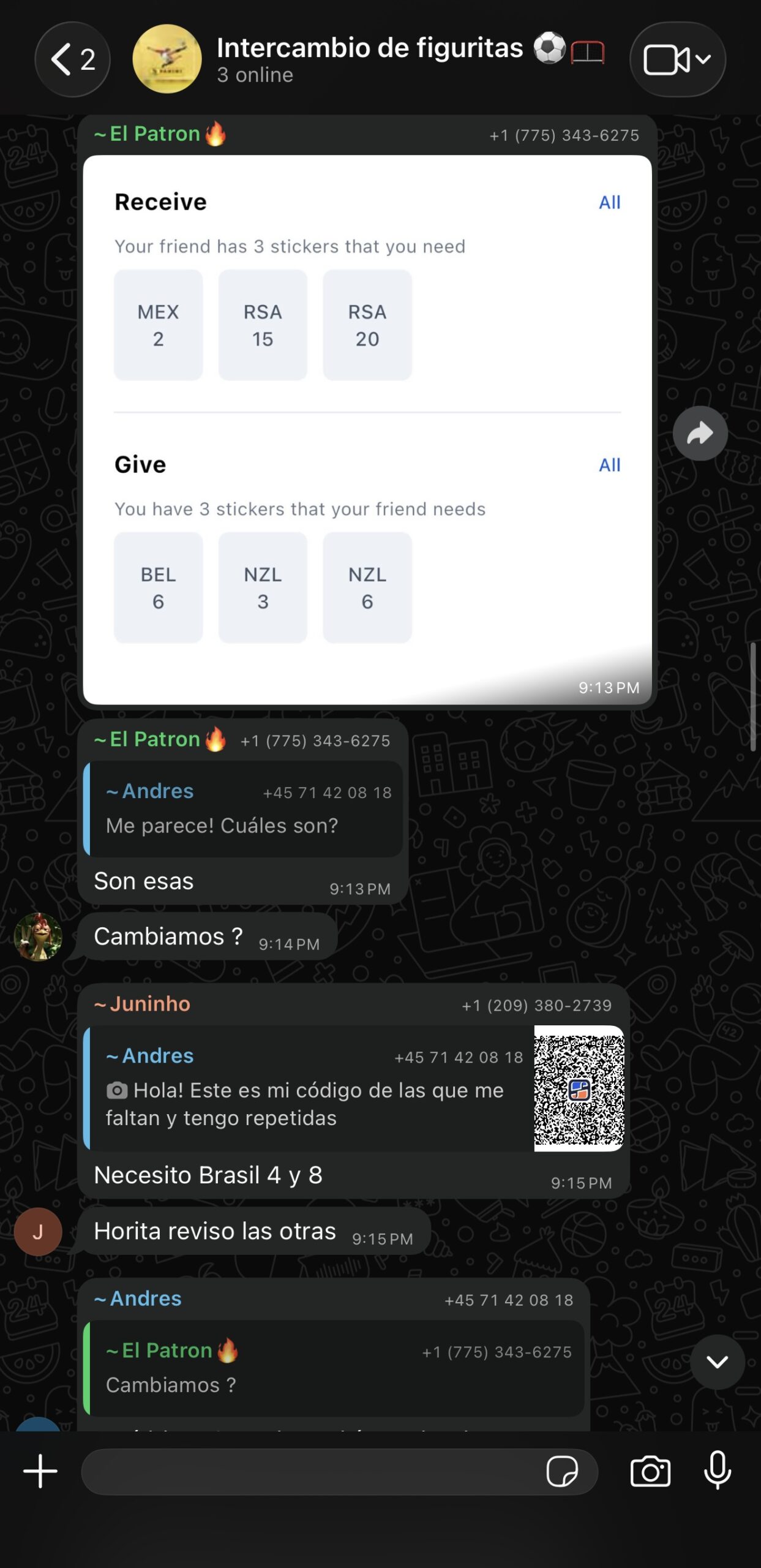
“I just wanted to make the process quicker,” says Flores. “On marketplace you have to spend an unnecessary amount of time going through every listing and every slide seeing if they have the sticker you need. You have to spend an unnecessary amount of time waiting for people to reply. In the group chat, all you have to do is write what you need and if someone has it you’ll know within seconds or minutes.”
Flores has also used the group to schedule larger sized community meetups where multiple people can trade with each other in person. For example, on May 31, he coordinated the first large gathering for the sticker collecting community at Teglia’s Paradise Park futsal courts. Here collectors met up for trades in a more communal setting. Around ten people showed up with their collections to trade, share, and embrace the World Cup culture.
“There is no fun in having to do every trade individually,” said Flores. “Part of what makes it so fun, part of what has kept me collecting over the years, is the fun that comes when collectors get together.”
Now, as the WhatsApp group grows – and more meetups are planned–, what started as scattered individual trades is beginning to resemble something to an intentional network, one built through exchanges that turn into progress, sticker by sticker.
Therefore, keep an eye out and you might see trades going on in parking lots, parks, and through messages in group chats. Because with the World Cup now underway, many Panini albums still remain unfinished business.

Exploring The Landscape Of Bilingual Journalism

University cancels programs in Italy and South Korea due to global coronavirus outbreak
Generating Transition: Local Maker Space Faces Uncertain Future
About The Author
