New Mural Unveiled at UNR’s Latino Research Center Reflects a Deep Cultural Heritage
September 25, 2025 By
Noticiero Movil
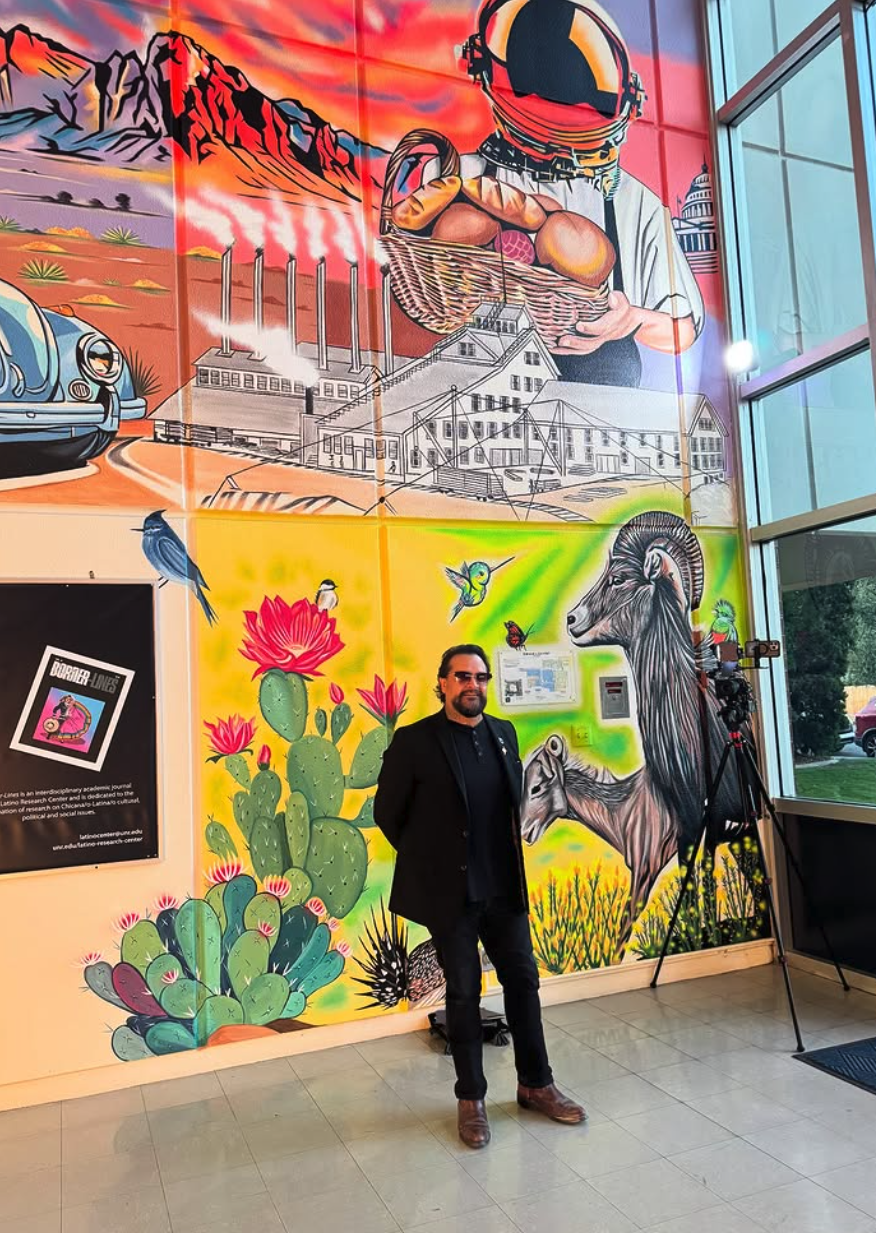
On a day that would become a landmark in the history of the University of Nevada, Reno, a community gathered not just to unveil a work of art, but to witness a living testament to resilience, pride, and the promise of the future.
The event, hosted by the UNR Latino ResearchCenter (LRC), was more than a ceremony; it was a powerful narrative told through speeches and vibrant imagery.
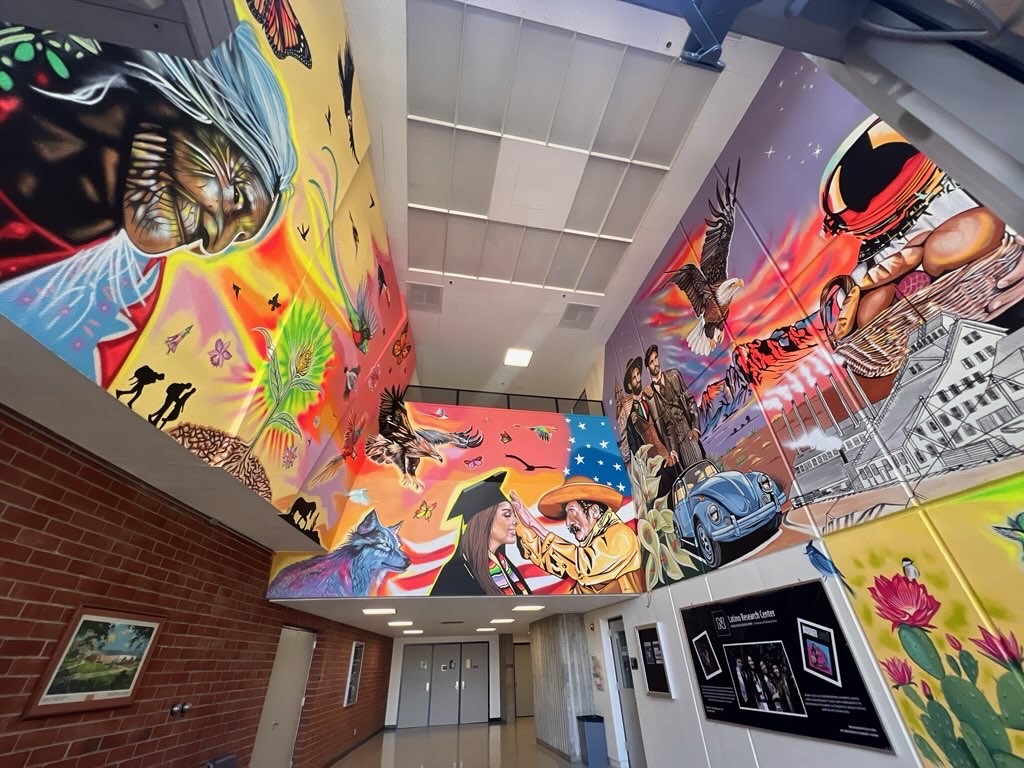
Upon entering the center, a space I was visiting for the first time, I was immediately enveloped by a sense of heritage and identity. The walls were a gallery of Latino art, each piece a window into a culture rich with stories. I saw vivid depictions of nature, intimate family portraits, and works that radiated with a fierce pride. One photograph, in particular, captured my attention: a young mixed-race Latina woman, her clothing a beautiful fusion of her Latina and Native American heritages. This visual medley set a powerful stage for the main event.
As the crowd filled the space, a feeling of joy and solidarity hung in the air. An older gentleman strummed a guitar, his music weaving through the chatter and laughter, creating an atmosphere both festive and deeply meaningful.
The ceremony on September 15, 2025 – the first day of Hispanic Heritage Month – began in the lecture hall, led by Jafeth E. Sanchez, the director of the LRC. She introduced the first speaker, Malory Shaw, an undergraduate student who shared a deeply personal story. She spoke of her journey as an Afro-Latina, grappling with her identity as a child and blossoming into a confident young woman who now embraces her heritage wholeheartedly. The struggles she dealt with concerning her being mixed-race is a common story throughout Latino history going as far back as the 1600s. According to authors Ramón A. Gutierrez and Tomás Almaguer explained in The New Latino Studies Reader, “racial status was of grand importance because it was intimately associated with one’s legitimacy or illegitimacy at birth … illegitimacy was deemed an indecent and shameful mark because of its association with mixed racial unions and the generation of race.” Shaw’s words were a powerful declaration that differences in hair or skin do not diminish one’s connection to their roots.
Next, Edmund J. Cain V, another student and a member of the family whose legacy helped establish the center, expressed his pride in seeing such a large turnout. His words underscored the importance of this space as a hub for the thriving Latino community.
The momentum continued with Osvaldo Jimenez-Estupinan, the director of Latinx/Hispanic community relations. He delivered a powerful history lesson, reminding everyone that the contributions of Latinos to both UNR and Reno had long been overlooked. He spoke of a new era of recognition and described the mural itself as a multi-layered story of an immigrant people battling adversity, standing up for their rights, and refusing to be silenced. He concluded with a resounding truth: Latinos have always been a part of this country’s fabric, and their time for recognition has finally arrived.
Michael A. Flores, the vice president of government and community engagement, then took the stage. He emphasized the welcoming nature of the Latino community, especially in a time of social division in the United States. He shared a touching story of his grandmother, who arrived in this country with nothing but a dream, a dream that had culminated in her grandson holding a position of leadership. His message was clear and powerful: representation matters, and Latino voices are vital.
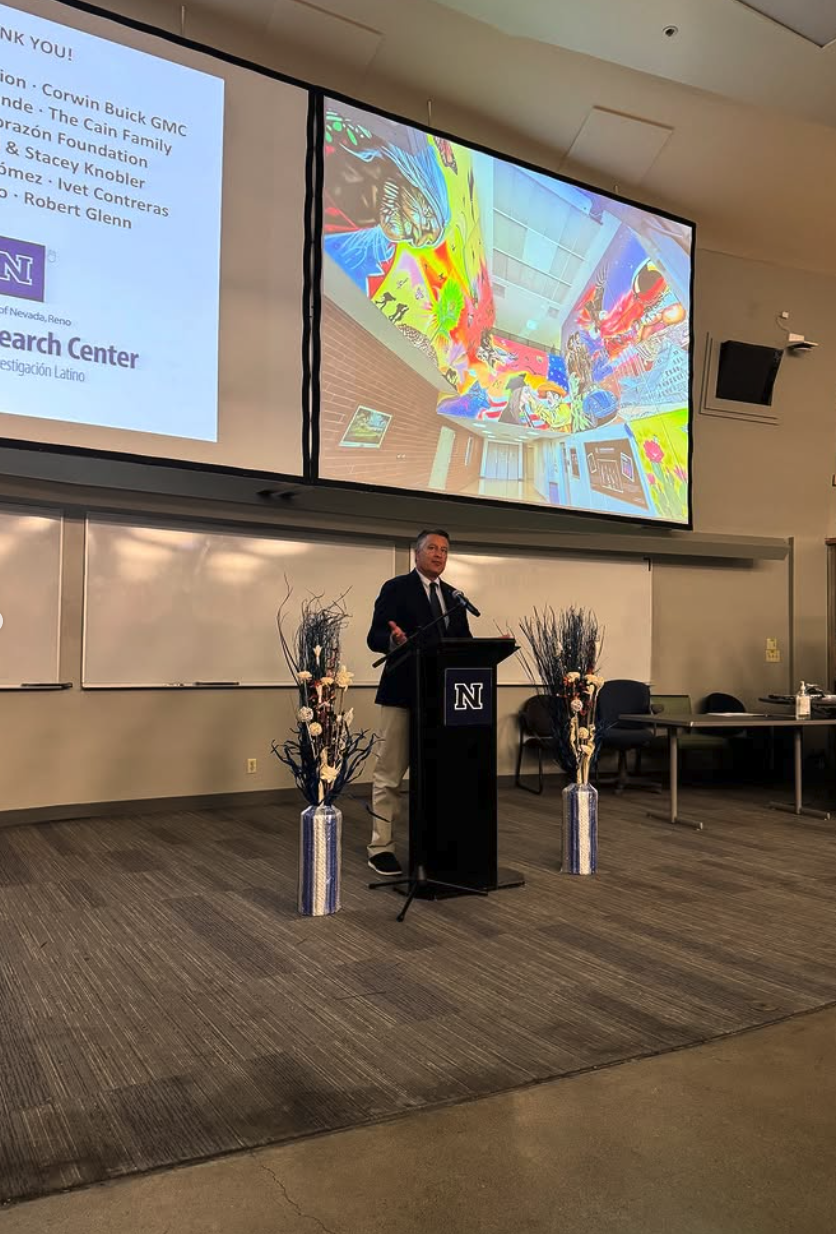
The narrative ascended to an even more epic scale with the arrival of UNR President Brian Sandoval. He began by honoring his own family’s history: his grandmother, a mother of twelve, and his parents, who built a life for him and his sister.
He recounted his parents’ simple yet profound advice to him as a child: “Stay in school and keep your head down.” He then also revealed a very personal and professional goal he had upon applying for the presidency: to transform UNR into a Hispanic-Serving Institution by achieving a student population that was at least 25% Latino. This is a very admirable goal, as according to the U.S. Census, Reno’s Hispanic population is 24.6%, while Nevada’s as a whole is 28.7%. This makes it even more impressive that President Sandoval was able to achieve this goal in only five years.
He shared a powerful observation: “When you’re in the middle of history, you don’t realize you’re making it.” He declared that the mural’s unveiling would be remembered as one of the university’s most significant achievements. President Sandoval expressed a humble hope that he wouldn’t be the last Latino president and pledged to continue serving Latino students long after his term. He believes this mural will become an iconic campus landmark, a place where people see their own stories and the stories of their families reflected.
Finally, the artist behind the masterpiece, Edwin Martinez-Escobar, shared his inspiration. When asked what moved him to create his art, he didn’t point to a single person or event. Instead, he said his motivation was “the Latino spirit across the state of Nevada.” His mural, he explained, is a timeless epic of resilience, representing the past, present, and future. It honors the sacrifices of grandparents, the contributions of the current generation, and the promise of children who will continue to drive change.
His final words echoed the sentiment of the entire event: “No matter where Latinos come from, they have a place in this country.”
This event was a profound and beautiful celebration of culture, knowledge, and pride. It stood as a stark contrast to the negative stereotypes often portrayed in the media, revealing a community that, like any other, simply desires a life of peace while celebrating its rich heritage and significant accomplishments.
This is demonstrated in the 2024 McKinsey & Company article “Latinos in Hollywood: Amplifying Voices, Expanging Horizons,” as studies have shown that when Latinos have creative influence in films (and the arts generally), the majority of the stories center around family. This is a huge difference to when Latinos do not have creative influence, as the stories center around crime.
Overall, attending this ceremony was a privilege, and a powerful reminder that art and community can come together to tell a story that is not only incredible, but profoundly true.
Jabari Taylor-Reid, a senior journalism major at the Reynolds School of Journalism at the University of Nevada, Reno contributed this article to Noticiero Móvil.
This observation of Latinidad is part of the “Latinos in the Eyes of the Media” special series. In this section, Noticiero Móvil publishes ethnographic pieces by UNR students that dive into the spaces that the Latinos occupy. In this role, the students watch, listen and engage with a population to understand the “emic” or insider behaviors of this community and compare it to how Latino characters, culture and norms are portrayed in the media. The goal is to explore and illuminate how a lack of Latino representation in the media continues to promote discriminatory and stereotypical practices that affect Latinos to this day in the U.S.